
The Kind Hosts of Willie Wimmera: a talk from local historian Dr Mary Chambers
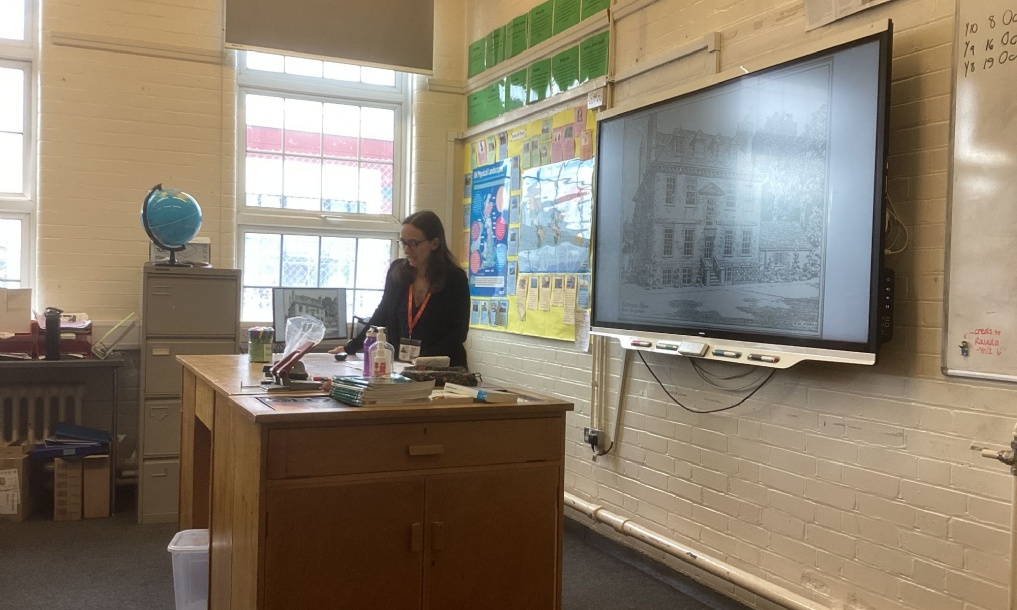
The History and English departments were delighted to welcome local historian Dr Mary Chambers to Kendrick to talk about her recent book, The Kind Hosts of Willie Wimmera, which tells the true story of a 10-year old Aboriginal Australian boy who was brought to Reading in the 1850s by an Anglican clergyman and tragically died of tuberculosis a few years later.
Dr Chambers spoke about the detective work involved in researching Willie's story: her primary source was a memoir written a few years after Willie's death, but all the people with whom Willie interacted were referred to in code. Using the 1851 census and other records, she was able to track down who many of these people were in order to paint a more vivid picture of Willie's time in Reading. She even revealed a connection to Kendrick School, as Willie attended a dinner at Watlington House, which would later become the original site of our school; he was also educated alongside the sons of gentlemen (including a prime minister's grandson and an Irish peer) at a school in Iver.
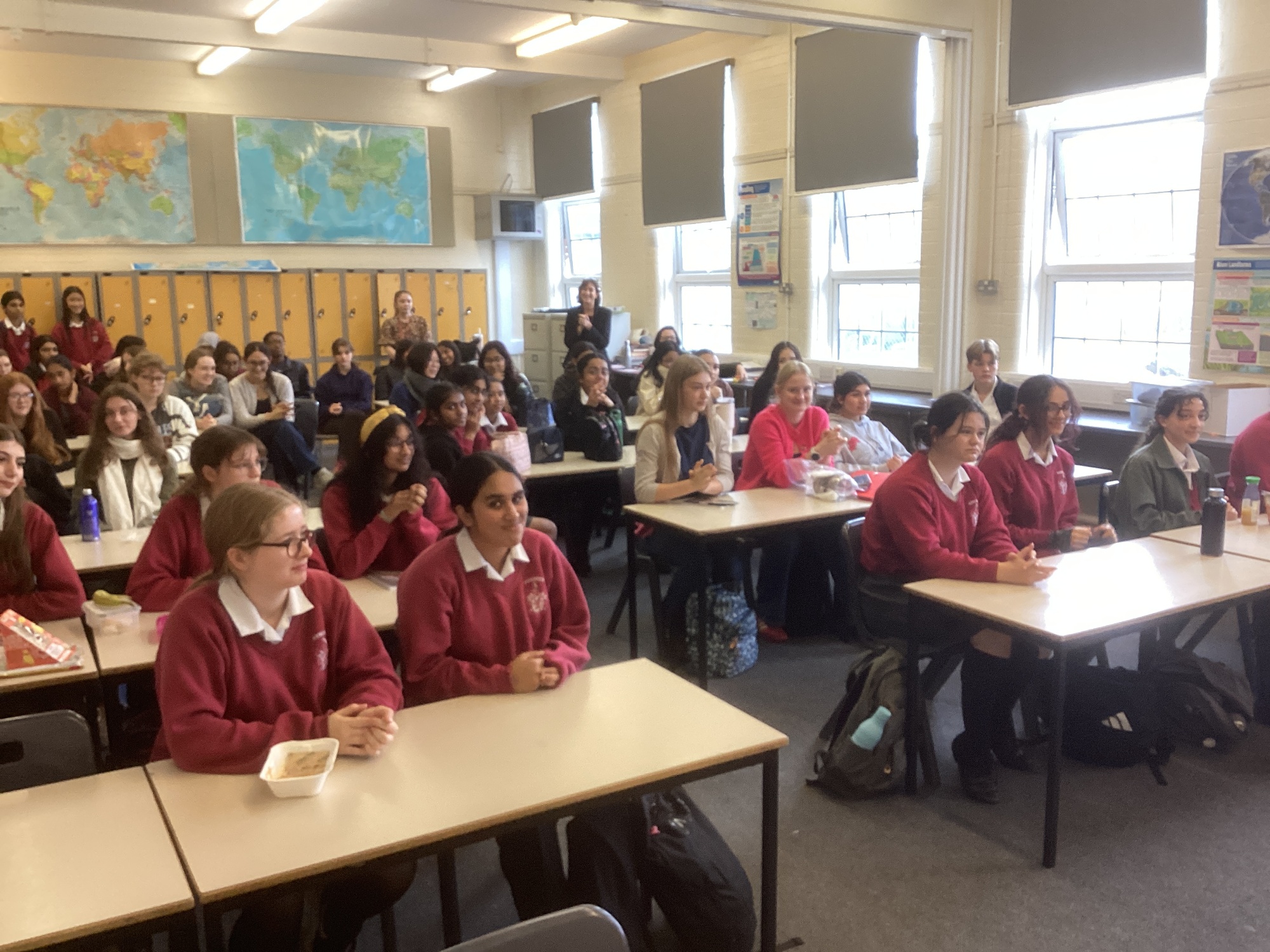 Around 50 students and staff came along to listen to Dr Chambers's talk and had many questions for her afterwards. Her book is available to buy from Two Rivers Press here: https://tworiverspress.com/shop/the-kind-hosts-of-willie-wimmera/. You can read a fuller review by Mr Dilley, our Head of English, below.
Review of The Kind Hosts of Willie Wimmera
The Kind Hosts of Willie Wimmera is a fascinating work of local history, telling a story that spans continents.
Willie Wimmera was a ten-year-old Aboriginal Australian boy belonging to the Wotjobaluk People who was brought to the town of Reading in 1851 by an Anglican clergyman, Septimus Lloyd Chase. Willie’s mother had been killed five years before in a settlers’ raid of a Wotjobaluk camp on the banks of the Wimmera river, and he spent the next few years living on the settlers’ sheep station until he followed them to Melbourne and was then found wandering the streets.
Unusually, Lloyd Chase did not take Willie to England as an exhibit, or to be a servant; instead, his purpose was both evangelistic – to give Willie a Christian education so that he might in due course ‘return to Australia and teach his poor benighted people’ – but also humanitarian and political: Mary Chambers argues that ‘Willie was Chase’s chance to prove […] that Willie did not belong to some kind of subspecies of human with a lower level of intelligence – as some people believed at the time’.
Willie tragically died of tuberculosis only a few months after his arrival in Reading (something which, as Chambers points out, he might have contracted from settlers in Australia), but he is commemorated in a didactic and rather sentimental religious tract by Harriet Scholefield published in 1853, A Short Memoir of William Wimmera, an Australian Boy, reproduced in full at the end of this book.
Using Scholefield’s Memoir, the 1851 UK census and other sources, Chambers is able to tell the story of the months Willie spent in Reading, by identifying his various ‘kind hosts’. She unearths a number of surprising contradictions which attest to the genuine care and affection with which he was treated. Very soon after his arrival in Reading, he attended a dinner at the grand Watlington House – not as a servant, but as a guest. Lloyd Chase also arranged for him to be educated at a school in Iver alongside the sons of gentlemen and aristocrats. At the same time, he was housed with a poorer family and learnt the local trade of straw plaiting – something which Chambers ingeniously links to the Wotjobaluk crafts of weaving and plaiting, with which Willie would have been familiar as a young child.
This book is meticulously researched, and Chambers helpfully identifies the sources on which she has drawn to reconstruct Willie’s life. At the same time, it is highly readable and, at under 70 pages, accessible to a wide audience. Chambers’s personal interest in the topic – as someone who partly grew up in Australia and now lives in Reading – shines through, and the book also features beautiful linocut cover design and maps (both of Victoria and Reading) by Sally Castle, alongside a range of other illustrations and photographs.
Chambers is alert to the nuances and complexities of the church’s engagement with Aboriginal Australians, and unlike Scholefield’s Memoir, does not attempt to sanitise a story which in some ways foreshadows the later scandals of the Stolen Generations. But she also paints a picture of genuine welcome and hospitality 175 years ago, something which resonates with Reading’s proudly multicultural status today. This book will be of interest to Reading residents, to anyone interested in British-Australian history.