Sociology in Action

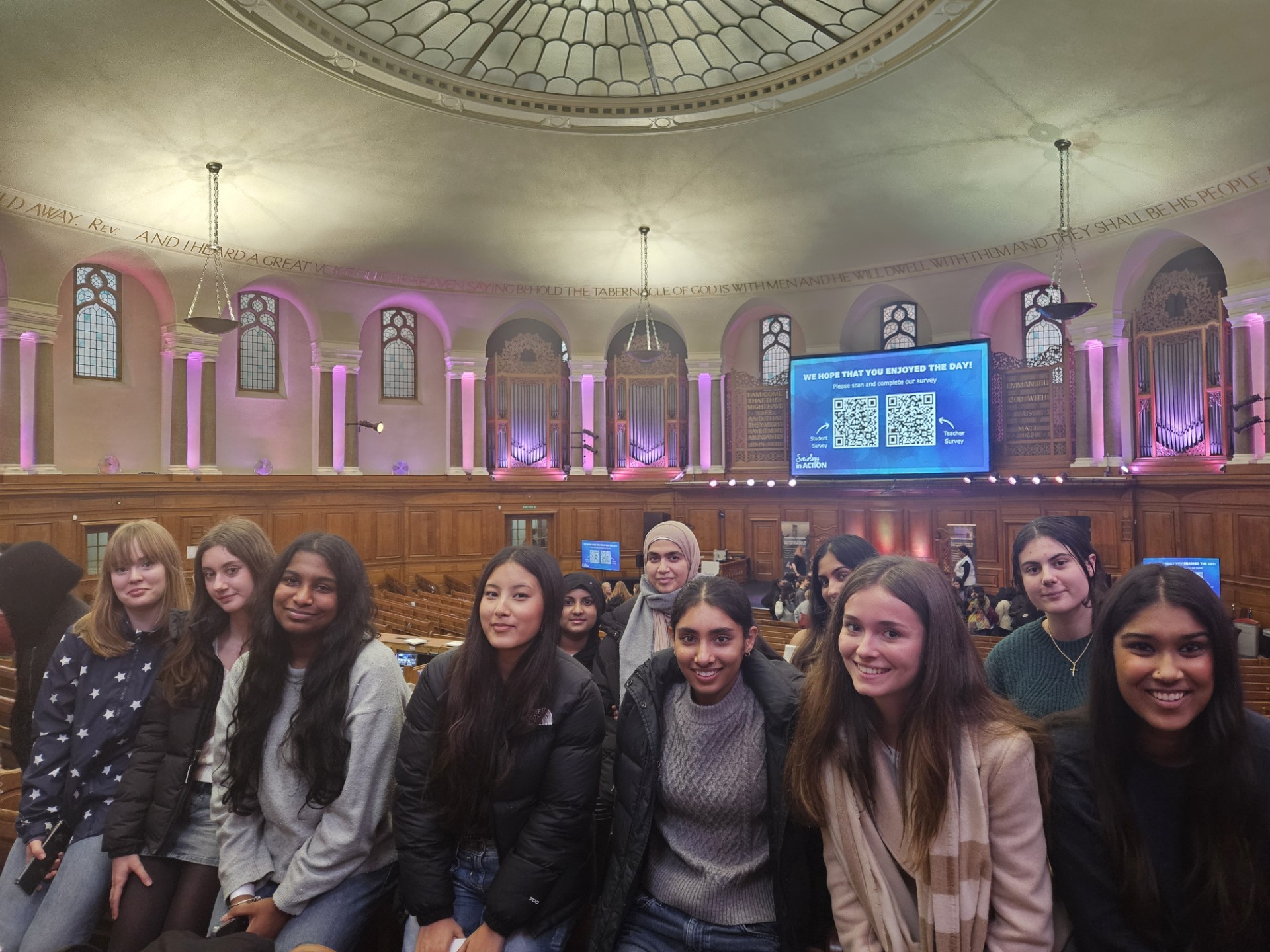
On Monday the 10th of November, the A-level Sociology students attended the ‘Sociology in Action’ conference, hearing from subject experts about a wide range of sociological issues.
We had six talks: abolitionism, celebrity culture and the media, representations of female crime, exam skills, wealth disparity and its effects on childhood, and gender, feminism and the family.
Abolitionism raised interesting questions about the necessity of punishment and suggested the merits of abolishing or radically reducing the number of people in prisons and the importance of reshaping our language to reduce the acceptance of imprisonment as the common means of justice in society.
The talk on celebrity culture and the media highlighted different celebrities and their influence on the rise in consumerism. We explored cigarettes as an example of the power of the media, as they were once a symbol of emancipation and rejection of traditional feminine stereotypes.
Gemma Birkitt talked about representations of female crime. She discussed the most common types of female crimes, as well as common reasons for female crime (e.g. poverty) to suggest the judicial system fails to respond adequately to women. Birkitt discussed the dual punishment of women who commit crime in society, for the ‘betrayal of womanhood’ and for ‘failing to submit to the law’. In our sociology lessons, we have explored other forms of dual expectation placed on women, such as the dual burden of paid work and housework.
Danny Dorling explored wealth disparity in England, a topic covered in his book, ‘Seven Typical British Children Today’, in which he uses real data to explore the lives of fictional children from different socio-economic backgrounds. He highlighted the impact of economic inequality on childhood experiences and life changes. Dorling ended his talk with a hopeful outlook, noting that 41% of GDP was spent on public services in 2023, which he presented as evidence of a shift towards greater social equality.
Ann Oakley, a key sociologist on our course, talked about ‘Gender, Feminism and the Family’. She reflected on her own experiences of the education system, highlighting the ‘hidden structural discrimination’ she faced, such as Oxford University in the 1960s only admitting one woman for every six men. She raised the issue of the wealth divide, highlighting that 90% of pension wealth is owned by men. She critiqued Parson's theory of the sexual division of labour, which we study in our course, arguing that it is male-focused and disregards the value of women’s unpaid labour, seen in its exclusion from measures like GDP.
Overall, the Sociology in Action trip was an interesting, informative event. We heard from field professionals, gaining deeper insights into key aspects of our course, as well as discovering sociological ideas not covered in the specification.
Thank you to Mr Nemeth, Mrs Callcut-John and Frau Mueller for making this trip possible!